
Exhibition Ecotoon
Interview with Rosa Ronsdorf
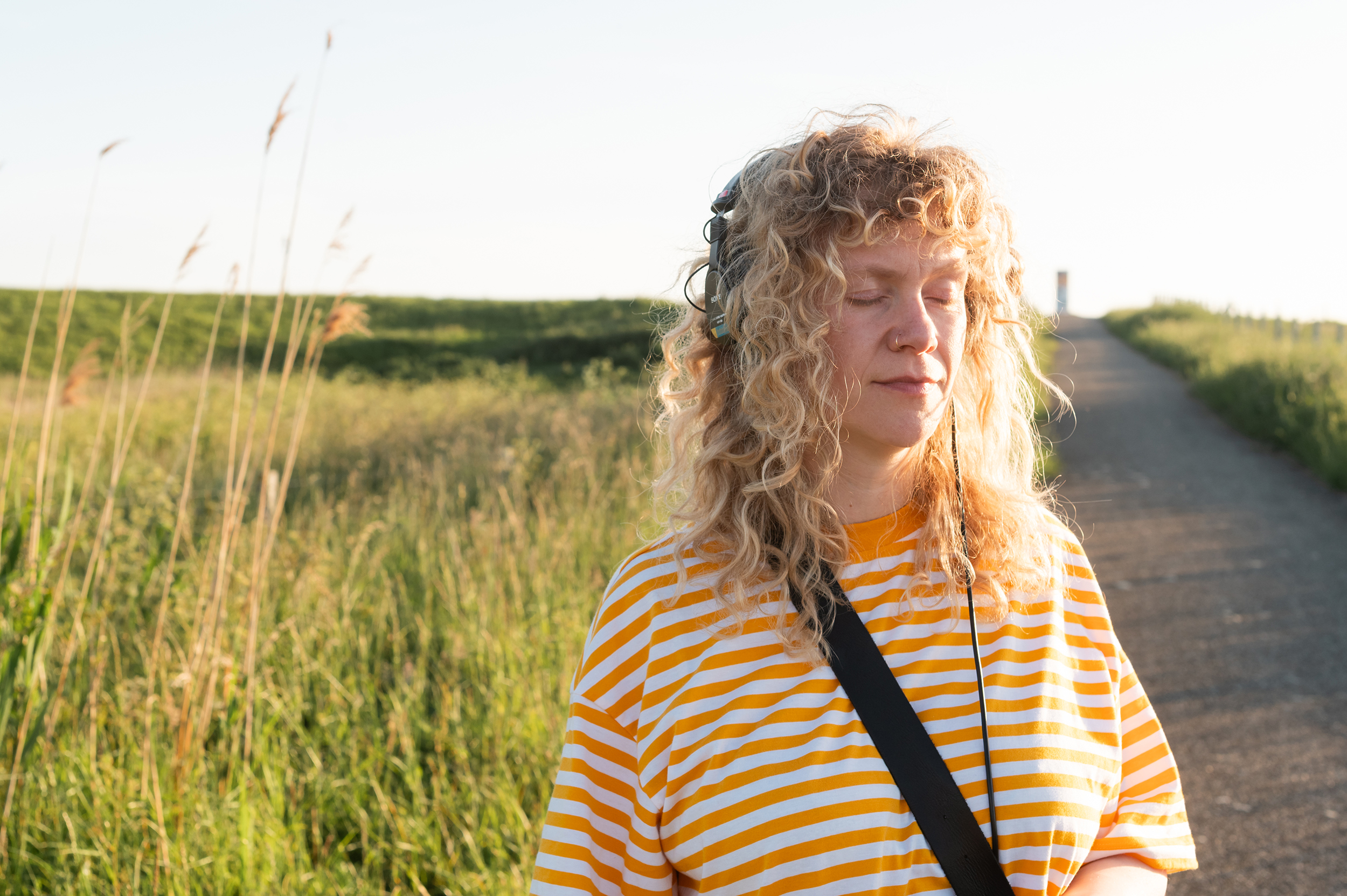
On 15 August 2026, Bewaerschole opens Ecotoon, a new exhibition by Rosa Ronsdorf. This installation centres on the sounds of Schouwen-Duiveland: a composition that brings human and non-human voices together in a spatial listening experience. We spoke to Rosa during her residency in Ellemeet, where she laid the groundwork for her new exhibition.
Listening as an artistic language
Rosa Ronsdorf is a sound artist, musician and composer. She plays in the band Spill Gold, composes for theatre and develops installations within the visual arts. Sound is always her primary language. In previous projects, she worked with field recordings of a melting glacier in the Alps and explored sounds from the soil of industrial areas. Her work has been presented at Art Rotterdam, Nest in The Hague and Arts Itoya in Japan, among other venues.
Who do we hear, and who goes unheard?
This question emerged during her graduation research at the Dutch Art Institute, where Ronsdorf explored the work of women pioneers in electronic music. Many of these composers laid the foundations for new musical developments, yet are absent from the history books. “That research got me thinking: who do we hear, and who goes unheard?” This interest led her to establish The Listening Project together with others. At the same time, her attention increasingly shifted towards the world around her. “At a certain point, I also began listening from an ecological perspective. We face climate change, droughts and floods, but are we actually listening to them? That drew me closer and closer to landscape and nature,” Rosa explains.
An island of encounters
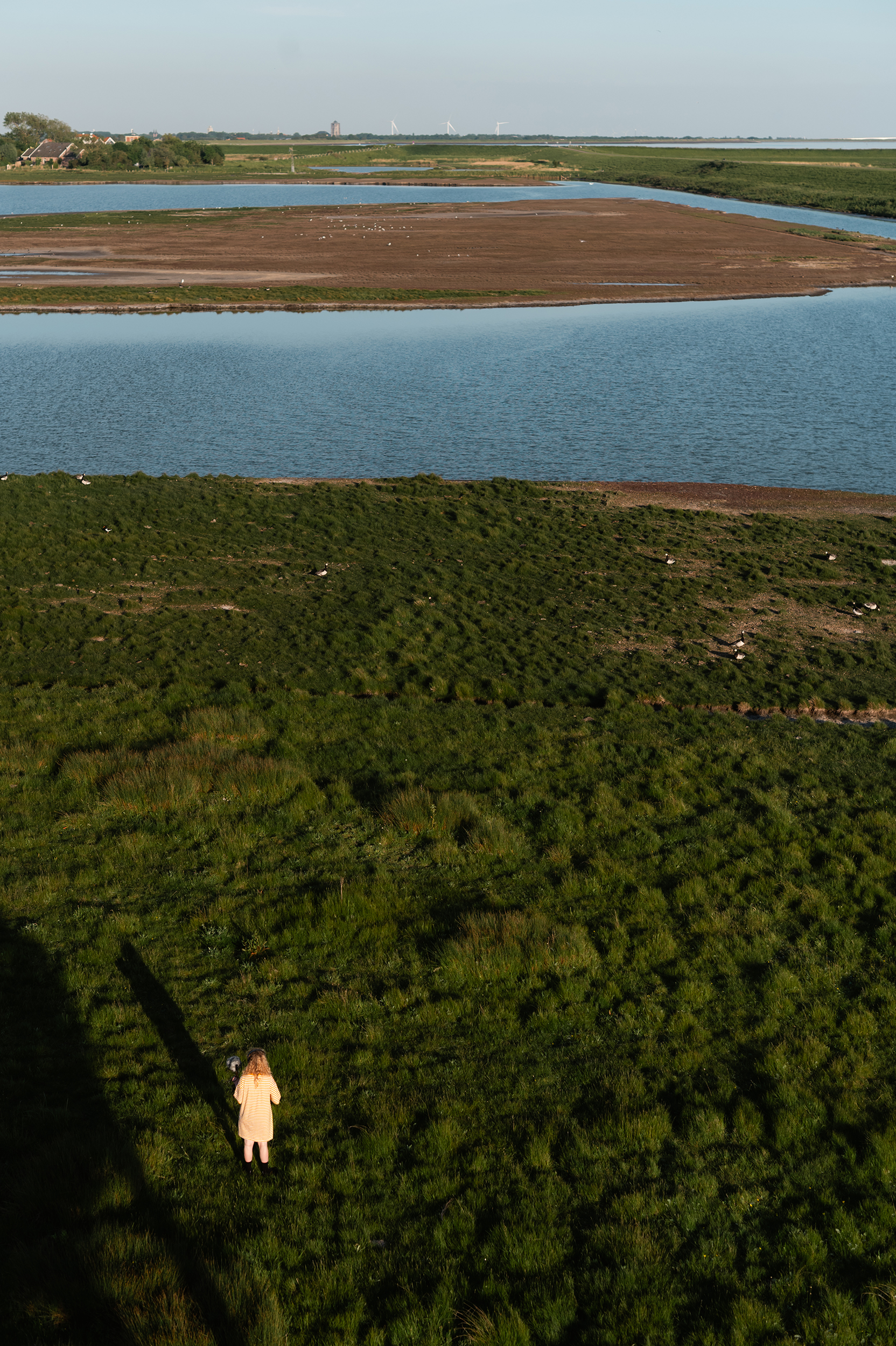
For her exhibition at Bewaerschole, Ronsdorf spent a month on Schouwen-Duiveland. She explored the island on foot, equipped with microphones and an attentive ear. Something soon struck her: nowhere here is nature entirely free from human influence. “You constantly sense the relationship between people and landscape. It is about fresh and salt water, about making space and taking up space. Everything seems interconnected.”
This observation led her to focus on ecotones: transitional areas where different landscapes meet, such as dykes, dunes and areas like Plan Tureluur. For Rosa, these places give rise to a particular kind of encounter. “Listening is also an encounter between you and a sound. Between you and a bird. Or between you and a tree,” she says. Because the relationship between people and landscape is so tangible on Schouwen-Duiveland, she decided to give the human voice a place in the exhibition too. For Ecotoon, Rosa collaborated with Zilt, a choir from Burgh-Haamstede. The choir’s voices are woven together with sounds from the island in a composition of human and non-human sounds.
Listening with the whole body
For Ecotoon, artist Maike Hemmers developed a textile sculpture that invites visitors to sit down and listen. The work provides a soft surface for the listening experience. It is inspired by Polaris (1987), a painting by artist Martin Wong in which children sit in a circle playing marbles on a map of a constellation. The sculpture translates this image into a physical space: a surface where visitors, like the children in the painting, turn their attention towards something together.
The fabric is dyed with indigo and plants, most of which come from Yoeri Guepin’s garden in Nesse Terneuzen. The patterns were created by wrapping the textile around stones. The surface is treated with clay and soil from Schouwen-Duiveland. Sitting on the work, visitors listen to the landscape with their whole body.
An invitation to listen differently
During the development process, Ronsdorf drew inspiration from composer Pauline Oliveros’s philosophy of listening. Her Deep Listening method begins with a simple idea: hearing is not the same as listening. Rosa wants to extend that invitation to visitors. “Open your ears and pay attention to what you hear,” she says. “You might discover something you had not noticed before.”
Read more here in the in-depth text: The landscape listens back: Rosa Ronsdorf and the hidden sounds of the earth
by Renée Korbee.
The artist on their work
Listen to the artist talk about their work or watch the video.